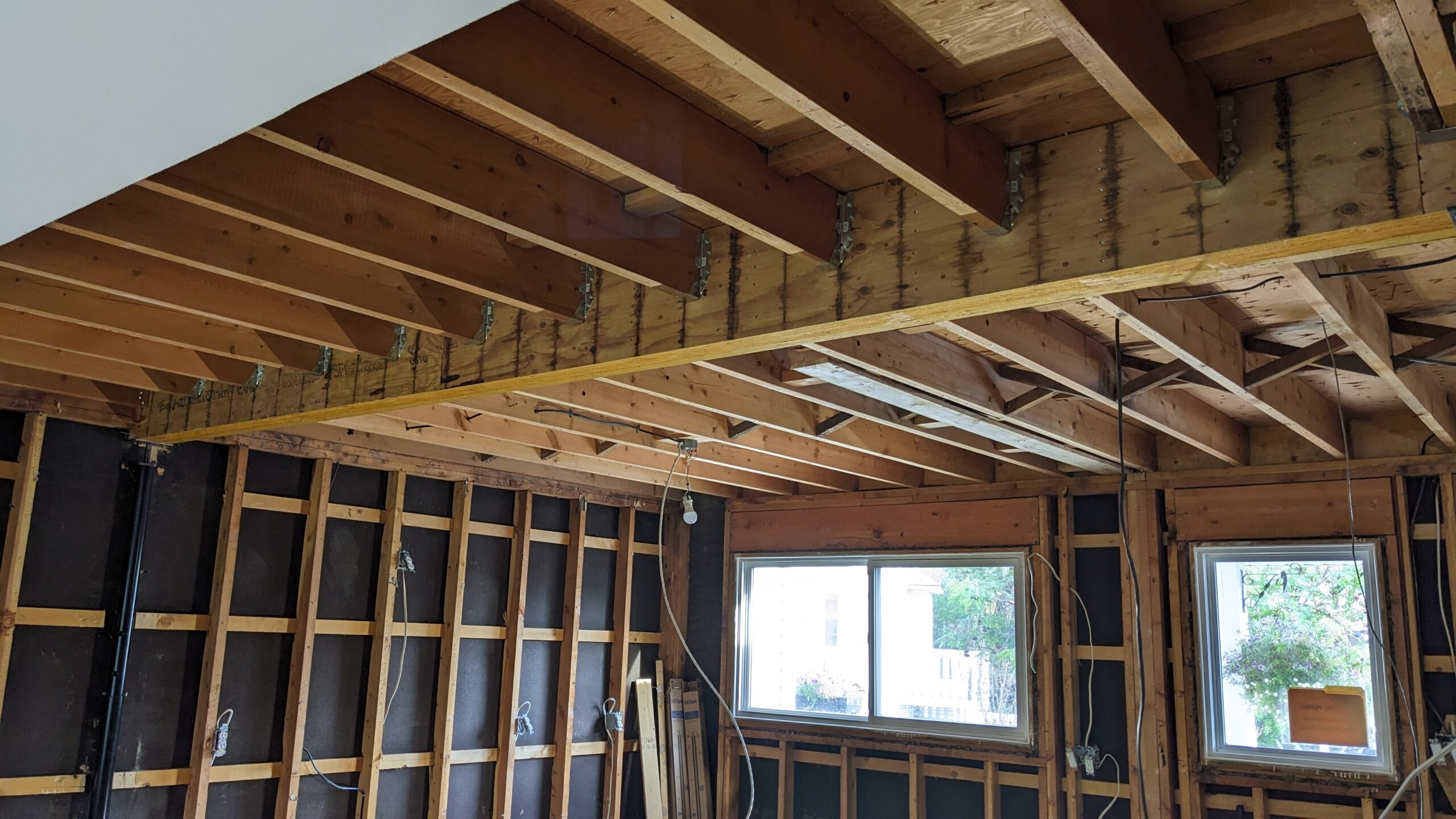
If you live in a newer home—or are planning to build one—you’re benefiting from major improvements from wood framing over the last few decades. The way homes are framed today is dramatically different from how they were built years ago. The result is a house that feels warmer, more open, and structurally stronger.
One of the biggest changes is the use of engineered wood products. Instead of relying only on traditional solid lumber, builders now use engineered floor joists, trusses and laminated beams. These materials are manufactured for strength and consistency, which means they are less likely to twist, shrink, or warp over time. For homeowners, that translates into fewer squeaky floors, fewer drywall cracks, and a structure that holds up better long term.
Engineered floor joists and roof trusses have changed the way homes are designed. With larger spans you no longer need as many interior load bearing walls to support the structure. This makes open concept layouts easy, with larger kitchens, wider living areas, and fewer posts or bulky beams interrupting your space.
Comfort has improved as well. With 2×6 framing for exterior walls instead of the older 2×4 standard. That extra wall depth allows for more insulation to increases the R value. More insulation means better temperature control, lower energy bills, and a home that feels more comfortable year-round.
Another major improvement is how heating, plumbing, and electrical systems are installed. Engineered floor systems are built with openings that allow ducts, pipes, and wiring to run through them without weakening the structure. Helping to maintain the home’s strength while keeping full ceiling height, resulting in fewer bulkheads and a cleaner, more open feel.
Modern fastening systems how improve structural strength. Homes today use advanced structural screws, metal connectors, and engineered hardware from companies like Simpson Strong-Tie. This makes connections stronger and easier to calculate for strength.
For homeowners, that means fewer structural issues, lower utility costs, and living spaces that feel larger and more functional. Wood framing may still be the backbone of residential construction, but today it performs better than ever before.